

How Google Finds Your Website (SEO Explained Simply)
Imagine opening a beautiful new shop in the middle of nowhere without putting up a single road sign. Even if your products and services are excellent, very few people will know your business exists.
A website works in much the same way. Simply publishing a website does not guarantee that people will find it. Google first needs to discover your website, understand what it offers and decide where it should appear in search results.
This process is known as Search Engine Optimisation (SEO). While SEO may sound technical, the basic principles are easy to understand. In this guide, we’ll explain how Google finds your website and what you can do to improve your chances of appearing when potential customers search online.
Step 1: Google Discovers Your Website
Google uses automated software called Googlebots to search the internet continuously. These bots follow links from one website to another, looking for new pages to add to Google’s search index.
Once your website is live, Google may discover it naturally through links from other websites or by finding your sitemap. Submitting your website through Google Search Console can also help Google find your pages more quickly.
The easier your website is to navigate, the easier it is for Google to discover all of your important pages.
Step 2: Google Reads Your Website
Finding your website is only the beginning. Google then analyses each page to understand what your business does.
It looks at elements such as:
- Page titles
- Headings
- Written content
- Images
- Links
- Page structure
For example, if you own a plumbing company in Harare, Google should quickly understand that you provide plumbing services in Zimbabwe rather than confusing your website with an unrelated topic.
Clear, informative content helps Google understand your website more accurately.

Step 3: Google Adds Your Website to Its Index
Google stores information about billions of web pages inside its massive search index.
Think of this index as an enormous digital library. Every time someone searches for something, Google looks through this library to find the most useful pages.
If your website has been indexed successfully, it becomes eligible to appear in search results.
Step 4: Google Decides Where to Rank Your Website
Being indexed does not automatically mean your website will appear at the top of Google.
Google compares your website with thousands of others before deciding which pages deserve higher positions.
Some important ranking factors include:
- Helpful content
- Fast loading speed
- Mobile-friendly design
- Secure HTTPS connection
- Relevant keywords
- Good user experience
- High-quality backlinks
- Regular updates
Businesses that continually improve these areas usually perform better in search results over time.
Why Keywords Matter
Keywords are the words and phrases people type into Google when searching for products or services.
For example, someone looking for web design services may search for:
- Website Design Zimbabwe
- Web Designer Harare
- Affordable Website Design
- Website Hosting Zimbabwe
By naturally including these phrases in your website content, Google gains a better understanding of the services you provide.
The goal is not to repeat keywords excessively but to use them naturally in useful, informative content.
Why Quality Content Is So Important
Google wants to recommend websites that genuinely help users.
That means your website should answer common questions, explain your services clearly and provide useful information that visitors can trust.
Regularly publishing blog articles, updating service pages and keeping information current all send positive signals to Google that your website remains active and valuable.
Simple SEO Tips Every Business Can Follow
Even without advanced SEO knowledge, there are several simple improvements you can make today:
- Write clear page titles.
- Use descriptive headings.
- Add high-quality images.
- Optimise image sizes.
- Create helpful blog articles.
- Include your business location.
- Add contact information.
- Make your website mobile friendly.
- Improve page loading speed.
- Keep your website updated.
Small improvements made consistently often produce better long-term results than trying to change everything at once.
Free Website Assessment from Infinity Web Design
Not sure if your website is performing as well as it should?
Infinity Web Design offers a FREE Website Assessment for businesses in Zimbabwe.
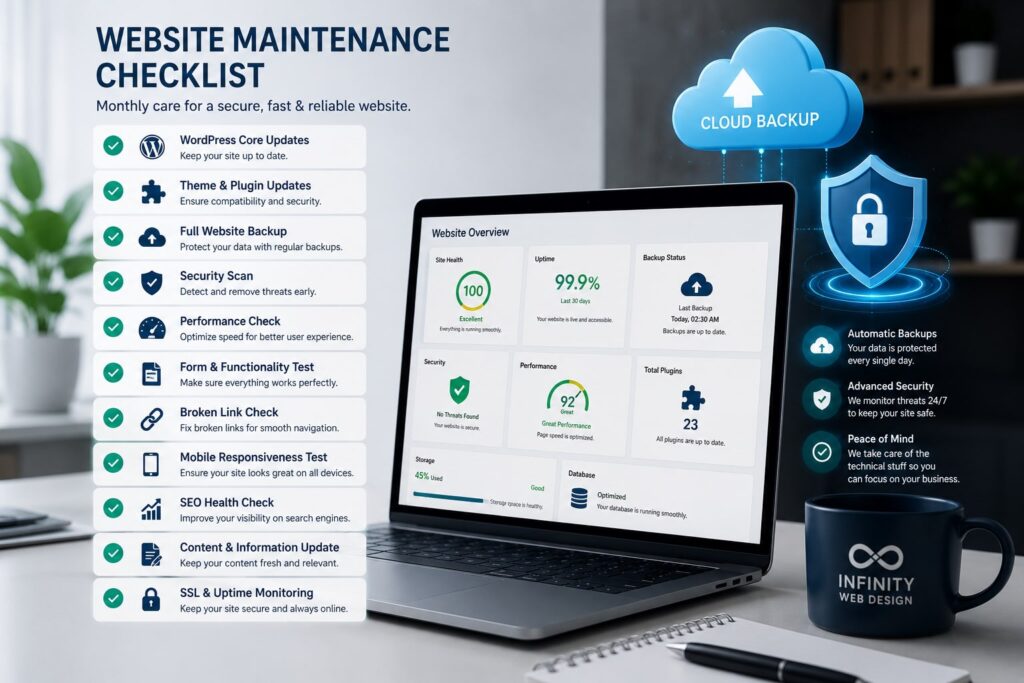
Our assessment includes a review of:
- Website loading speed
- Mobile responsiveness
- Basic SEO performance
- Website security
- Contact forms
- Broken links
- User experience
- Overall website design
After the assessment, we’ll provide practical recommendations to improve your website’s performance, security and visibility on Google.
There is no obligation to purchase any service—we simply want to help Zimbabwean businesses get the most from their websites.
Request your FREE Website Assessment today and discover how your website can perform better.
Why Professional SEO Makes a Difference
Although many SEO basics are straightforward, achieving consistent results takes time, experience and ongoing optimisation.
Professional SEO involves technical improvements, keyword research, content strategy, website performance optimisation and continuous monitoring to ensure your website remains competitive as Google’s algorithms evolve.
Working with experienced professionals allows business owners to focus on running their businesses while their websites continue attracting new customers.